
In this episode of Financial Lovemaking, Dr. Boyce and S. Tia Brown discuss Mel Gibson’s Half billion dollar divorce. Click the image to watch!
Wednesday, April 22, 2009


Thursday, April 16, 2009
Black Money: Ryan Mack, CEO

Dear Mr. Simmons:
My name is Ryan Mack and I have followed your career for most of my life. I have been a long-time admirer of your work, a tremendous fan, and believe that millions are inspired by the paths that you have created in the field of Hip-Hop. More importantly, as an advocate for financial literacy myself, I believe that the work that you have been doing through the Hip-Hop Summit Action Network as it relates to financial literacy has been second to none. However, I must admit to being somewhat disappointed with your recent pre-paid debit card venture - the "Rushcard."
The pre-paid debit card industry has always been an industry that is built upon a lack of knowledge within the community. It is an industry based upon the legal phrase which demonstrates that "false imprisonment is an intentional tort." In other words, if I put someone in a room and do not lock the door but tell them that the door is locked, they will remain in the room because they believe the door is locked. As a result of my action, I have committed a punishable crime. I view pre-paid debit cards in the same light. Those who know the strategies to empower the community have a moral obligation to those, who may not be as knowledgeable, to fully inform them. There are other more efficient means to empower those in our communities than pre-paid debit cards and other financially destructive establishments such as check cashing facilities. The typical bank offers free debit cards that if used properly do not have any fees affiliated with them and can be used for the same purpose as the pre-paid debit cards.
If we compare the fees affiliated with the Rushcard compared to the typical bank offered debit card, we can clearly see the advantage of the cards offered by the banking institutions.
Rushcard vs. Typical Bank Card
Activation Fee: Rushcard = $19.95 Typical Bank Card = Free
Convenience Fee: Rushcard = $1.00 Typical Bank Card = Free
ATM Cash Withdrawal: Rushcard = $1.95 Typical Bank Card = Free (At Branch)
ATM Balance Inquiry: Rushcard = $.50 Typical Bank Card = Free
Bill Payment: Rushcard = $1.00 Typical Bank Card = Free
Inactivity: Rushcard = $2.95 Typical Bank Card = Free
Refund of Rushcard/Bank Card via Check: Rushcard = $5.00 Typical Bank Card = Free
Wednesday, April 15, 2009
Is He Missing the Point? Fed Chairman Bernanke Says Blacks Lack Financial Literacy

American minorities need to "strengthen their financial literacy," Fed Chairman Ben Bernanke told students and faculty at Atlanta's historically black Morehouse College in Atlanta today.
On a day when President Obama delivered an Economic Crisis 101 lecture to students and faculty at Georgetown University, Bernanke was doing the same thing in Atlanta.
During an expansive Q-and-A session with Morehouse students after his speech, Bernanke was asked about the household wealth gap between whites and blacks in America.
"It’s absolutely right the difference between minority and white wealth is very significant, and part of that is related to income levels where whites have a higher average income," Bernanke said. "But even if you control for income level, you find minorities have gathered less wealth."
Is the Rushcard a Helpful Service or Predatory Lending?
Dr. Boyce Watkins, one of the world’s leading Financial experts and Black Social commentators, spoke with BBC World news about the RushCard, which has been heavily adopted in Black communities.
Watkins wrote this commentary about the Rushcard and you can click the image below to listen in on the interview. Dr. Boyce Watkins is a Finance Professor at Syracuse University and Financial Writer for America Online. He asks whether or not Russell Simmons is a pimp or if he is helping the Black community.

Tia Brown Breaks Down Respect in the Workplace

This week I look at issues of respect from both co-workers and your nearest and dearest.
I am 28-years-old and work in an office full of 45-56 year-old women. My issue is how to talk to them when they say things I do not like without being disrespectful. - Young & Angry In The Office
Dear Young & Angry In The Office,
I’m a firm believer of showing deference to elders, however the office isn’t the place to act out societal roles— you’re there to do your job. I firmly believe that the only way to get respect is to demand it. Some people have that certain thing about them that ensures people, whether they’re older or younger, never test them. Other people have to go get it. So how do you command respect? First, you always make sure that you’re on top of your game, for the work environment that means being efficient, punctual and dependable. Second, you have to speak up for yourself and address every infraction in a stern, tactful, professional way. That may mean giving a soliloquy about respect (such as, “we’re all on equal footing here, I give respect and I expect it,”) or taking people aside an individual when they say something that you deem is inappropriate. Only you can determine which approach will work best. Overall you want to make sure that you leave personal roles at home, these ladies are not your aunties, and they’re your co-workers –who likely take issue with working with someone 20 years their junior – so treat them as such.
My fiancé and I are planning a big, lavish, wedding and we have restricted our families to only inviting a certain number of people, so as not to exceed my parent’s budget. My fiancé’s family is insisting on inviting many more people than they are allotted and it has caused the price of the reception to soar. Do you think that I should demand that his family pay for some of the reception, or at least the head count of the additional people that they are inviting, or does that break some etiquette rules? – Breaking the Bank for the Big Day
Dear Breaking the Bank for the Big Day,
Etiquette was out of the door once your future in-laws stepped on your toes and didn’t respect your parents’ budget. Since they —like many others—love to plan with other people’s money I would like to tell you to just make them pay for their extra guests, but that could potentially cause long-term strife with your hubby-to-be. Consequently, you need to speak with him first and make sure you’re on the same page about the finances and the numbers. If both families were given an equal amount of guests then it is up to him to make sure that he stands firm by your side when you speak with his family. During the conversation make sure to reiterate that the day is you and your fiancé’s, but you understand why it is to the family, but your parents – who are paying – have given you a budget and it is disrespectful to expect them to pay any excess. Let them know the precise number of people that they are allowed to invite and that any extra guests must be pre-paid for by specific date if they are to be seated. You can also opt to include your parents in on the meeting. I doubt that your future in-laws will speak recklessly or be callous about spending your parents’ money in their faces. With that said…standing firm is only possible if you are financially independent of your in laws. You don’t want to play hardball with someone who’s helping to pay your rent/mortgage or watching your kids for free. So make sure that you’re in a position where you can’t be penalized for standing up for yourself – and your parents – or you may end up paying a bigger price later.
Tuesday, April 14, 2009
Your Black Money: Why Financial Predators Usually Have Black Prey

Why Financial Predators Usually Have Black Prey
By Dr. Boyce Watkins
www.DrBoyceMoney.com
I talked to my good friend Ryan Mack, CEO of Optimum Capital Management, the other day. Ryan wrote an interesting piece about The Rushcard, a new prepaid debit card offered in a partnership between Russell Simmons and Unifund, a company that typically makes its money from bad debt collection. I read the piece curiously, as I have been learning how the Rushcard works, why it exists and who might benefit from the service. On the flip side, there is the larger concern that someone might be taking advantage of those who have the least access to capital, largely African Americans in poor communities.
The Rushcard is a prepaid banking card with no credit check that allows consumers to deposit their paychecks onto the card, as well as make purchases and withdrawals as if the card were a regular Visa. Russell (a self-proclaimed “philanthropist”, a title likely used to pre-empt any accusations of fraud or exploitation) also argues that the card helps marginalized Americans to seek out the American dream.
I didn’t know that the American dream was to hold a piece of plastic. Credit cards have created an infinite number of American nightmares as they tend to breed excessive consumption. But one can certainly argue that this card deals with one serious problem in the Black community: a lack of access to capital and banking services. Many people in urban America can’t get bank accounts. Many more have bad credit, can’t get rental cars or find themselves leaning toward check cashing services to liquidate their paychecks. Russell, “the philanthropist” has apparently taken it upon himself to solve this problem.
I can say, as a Finance Professor, that the Rushcard would likely not make money if it were not filling a critical need. The problem, however, is that those who “help” individuals in need may end up abusing their power. One can argue that a pimp is “helping” a young homeless girl by giving her a place to live. A loan shark can say that he is “helping” a family get the money they need by lending the funds at exorbitant interest rates. A man who sells water for $10 a sip is “helping” a man in the desert get what he needs to survive. So, there is a thin line between “helping” someone vs. exploiting a given need or weakness.
I became quite concerned when I saw the long list of complaints from those using the Rushcard. Those who wrote the comments I saw on a blog about the Rushcard seemed to have serious problems with the customer care behind the card. In his article, Ryan does an interesting comparison between the fees of the Rushcard vs. those of a typical Bank card:
Rushcard vs. Typical Bank Card
Activation Fee: Rushcard = $19.95 Typical Bank Card = Free
Convenience Fee: Rushcard = $1.00 Typical Bank Card = Free
ATM Cash Withdrawal: Rushcard = $1.95 Typical Bank Card = Free (At Branch)
ATM Balance Inquiry: Rushcard = $.50 Typical Bank Card = Free
Bill Payment: Rushcard = $1.00 Typical Bank Card = Free
Inactivity: Rushcard = $2.95 Typical Bank Card = Free
Refund of Rushcard/Bank Card via Check: Rushcard = $5.00 Typical Bank Card = Free
So, if these numbers are any indication, it appears that the Rushcard is not a very good investment. Most reviews that I’ve seen recommend against using the card, since it appears that users are paying a premium for the Baby Phat design on the front. What’s more disturbing about the Rushcard is that Russell does not seem to be nearly as determined to fulfill his role as a “philanthropist” when it comes to helping African Americans overcome the underlying cause of the very problems he claims to be fixing. As Ryan explained it, “It’s like telling someone with a cavity that they should chew with the other side of their mouth.” The Rushcard offers few options to help people repair their credit, and I have personally found most of Russell’s financial literacy initiatives to be quite limited in impact.
While we cannot blame Russell Simmons and others for profiting from the lack of financial literacy and access to capital in the Black community, there are things we can do to encourage Russell to do the right thing. First, the Obama administration can and should implement programs to help those with poor credit obtain bank accounts. Every American should have access to a bank account, and services such as direct deposit should not be a luxury. Secondly, the Banking industry should stop passing over profitable investment opportunities in the Black community. Perhaps if Russell had more competition, his fees might go down. Third, there is no greater cure for money problems than good old fashioned financial literacy. Most victims of financial exploitation are not even aware that the exploitation is taking place. Financial literacy should be taught in every public high school in America, since it might actually be the one class that students actually use.
Russell Simmons is not necessarily a philanthropist, but he is not the devil. He is merely a symbol of a larger problem. The problem requires long-term solutions, and a high cost piece of plastic is certainly not one of them.
Dr. Boyce Watkins is a Finance Professor at Syracuse University. He makes regular appearances in national media, including CNN, BET, ESPN, and CBS. For more information, please visit www.BoyceWatkins.com.
Monday, April 13, 2009
Black Scholar Speaks on Predatory Lending

by Charles Lewis Nier III
Responding to a controversy regarding incendiary remarks that surfaced in the media from his former pastor, Reverend Jeremiah A. Wright Jr., United States Senator and Democratic presidential candidate Barack Obama came to the City of Philadelphia to deliver a major address on the issue of race in the United States. In a remarkable and widely-praised speech delivered on March 18, 2008, Senator Obama grounded his examination of the "complexities of race" on an analysis of the historical legacy of discrimination faced by African Americans. After invoking the words of William Faulkner for the proposition that "'The past isn't' dead and buried. In fact, it isn't even past,"' he proceeded to explain that "... many of the disparities that exist in the African American community today can be directly traced to inequalities passed on from earlier generation that suffered under the brutal legacy of slavery and Jim Crow." He proceeded to elaborate on some of the specific historical reasons behind racial inequalities, explaining:
Black Celeb News: Beyonce and Jay-Z made $80Mill Apiece last year

It’s no secret that most celebs can’t complain when it comes to their salaries — but how much do they actually make? According to Parade, quite a range in 2008 — from $1 to billions.
Jennifer Aniston reportedly earned $27 million on the strength of films such as “Marley & Me,” and funnyman Will Ferrell made $31 million. Actor/director Tyler Perry, the force behind the “Madea” movies, brought home $125 million, while “Grey’s Anatomy” star Patrick Dempsey made a McDreamy $3.5 million.
In the music world, Beyonce scored $80 million thanks to her latest album, “I Am… Sasha Fierce” and a budding film career, and husband Jay-Z did even better with $82 million. Country cutie Taylor Swift — the top-selling musician of 2008 — made $5.5 million. Resurgent pop princess Britney Spears wasn’t far behind, making $2.25 million.
Saturday, April 11, 2009
Black Mothers and Money: How Much Does It cost to Have a Baby Anyway?

By: Sarah Horner
April 8, 2009
An article from MSNBC.com entitled, "Budgeting for Baby: What does it really cost?" outlines exactly how much having and raising a child will cost you.
"If you've never been a budgeter, now's the time for a financial reckoning. Experts recommend that parents-to-be and new parents dedicate themselves to whittling down their credit-card debt (ideally — and here's some tough love — to zero), while at the same time, building an emergencies-only savings account of six to nine months' worth of expenses. Do whatever it takes to meet this goal: Spend on a cash-only basis and write down every expense — or use a free online spending tracker like Quicken.Intuit.com or Wesabe.com — so you have a visceral idea of where your money goes. And be prepared to sacrifice. "If you want to prioritize the expense of a child, well, you may not need as many minutes on your cell phone and you may not need as many meals in a restaurant," says Chatzky. "And by the way, you're not going to be going to restaurants much once you have a child, anyway!""
To read the entire article, Click here
Celebrities Sinbad and Dionne Warwick Find Trouble with the Tax Man

California's budget deficit would shrink by nearly $5 million if singer Dionne Warwick and comedian Sinbad Adkins would pay their taxes.
They are among the state's biggest tax scofflaws, according to a report issued Thursday by the Franchise Tax Board.
Sinbad owes $2.5 million in personal income tax while Warwick owes $2.2 million, putting them in the top 10 of the state's 250 worst tax debtors.
Friday, April 10, 2009
Genma Holmes Speaks on the Urgency of NOW

by Genma Holmes, YourBlackWorld.com
Last month, $2.7 million in federal stimulus money was awarded to the Nashville Career Advancement Center. Partnering with Meharry Medical College and the Oasis Center, 600 jobs created for teens needed to be filled through the grant. A sign up sheet was passed around at the Oasis Center board meeting asking for volunteers. This sounded like such a unique event that I could not help but put my name down.
I imagined all the possibilities and the huge difference this venture would make in the lives of so many teens. An idle mind is the playground for the devil; I can hear my grandfather muttering. Daddy kept folks busy by wearing us out down with work. This was his quick fix for the long hot days of summer and it kept us out of trouble.
With Daddy's words in my head, I volunteered not knowing what to expect. Information about the job fair was sent to schools and the media, but we had no way of knowing how many teens would attend. We are going to be ready for the unexpected I was told by our fierce leader, Hal Cato. I sensed from his tone, he had the weight of the world on his shoulders. The forecast was uncertain for the weekend and a first time job fair for teens had no room for the unknown.
Upon my arrival at Youth Opportunity Center @ 8:15am, I found the command center tent packed with teens. They came early and I sent up a prayer for the volunteers to get here soon. The job fair was scheduled from 10:00-3:00. By 9:00am, young people were everywhere. They were hungry for jobs. I looked outside and my heart skipped a beat and swelled with joy. As far as the eyes could see, folks were in line to snap up the ultimate teen prize, a summer job. It looked like an American Idol audition with kids from ages 14-19 wrapped around the building. How many jobs do we have, I questioned myself and everyone around me? After taking a second and third look outside, I wondered if we were "Jack" and the fast growing lines were going to become gigantic beanstalks.
Some of the vendors that participated at the unprecedented event were: Publix's, the Frist Center, BCN, Goodwill, Youth United, Metro Health Department, Hands on Nashville. Applications from Foot Locker, the Gap, Hobby Lobby, Aeropostle, Subway, Hibbet Sports, Sports Authority, Arby's, Shoe Carnival and a host of others were available for the teens to fill out and turn in. We even had a room filled with computers for writing resumes and several volunteers to assist. No details to finding a summer job were overlooked.
Your Black Politics: Most of Obama’s Team Consists of Millionaires

When President Barack Obama moved into the White House earlier this year, he took several of his fellow Chicago millionaires with him.
Newly released disclosure reports show virtually all of the top Chicagoans serving in the West Wing had assets valued at a million dollars or more at the end of 2008.
In several cases, the reports provide the first detailed look at the finances of some of the president's top aides and friends from Chicago who have risen with him. They also show the salary haircut many have taken to be in the White House, at least until they return to the private sector.
Some of the wealth can be attributed to the fact that the top staff members surrounding Obama — such as Chicagoans Rahm Emanuel, David Axelrod and Valerie Jarrett — are from a big city where salaries tend to be higher. Many of the comparable senior staffers with the previous two presidents came from Austin, Texas, and Little Rock, Ark., where salaries for top professionals tend to be the lower than in Chicago.
Thursday, April 9, 2009
Black Money News: More Help for the Unemployed On Its Way

For millions of jobless people dependent on unemployment benefits, the wait for help may be getting shorter.
After computer system crashes and overwhelmed phone lines at state unemployment offices inundated with record claims, federal funds are starting to ease the jam, says Richard Hobbie of the National Association of State Workforce Agencies. The $500 million from the economic stimulus package President Obama signed Feb. 17 began flowing into state coffers in mid-March.
The aid is separate from the package's $7 billion for enhanced employment benefits, which some Republican governors, including those of South Carolina, Louisiana, Texas, Alaska and Mississippi, have rejected because they say it would lead to higher business taxes when the federal funds end. The administrative funds are meant to improve claims processing and help the jobless find work.
"Now it's a matter of getting the money and spending it on the right things," Hobbie says. He predicts those filing for unemployment benefits "will see more reliable and faster service and more help at finding a new job."
Tuesday, April 7, 2009
Genma Holmes: Michelle Obama Gets Attacked by Jealous Designers


The fashion world is in a quite tizzy over Michelle Obama's decision to not wear well known designers duds. Bearing claws and fangs, designers are ripping her selections worn last week to shreds with their commentary. "How dare the First Lady of the United States wear American designers’ clothes and American brands made right here in the United States," they are crying loudly. Who does she think she is buying brands that regular folks can pronounce and giving younger designers credibility that would have taken decades to achieve? These questions were being asked online, on talk shows and cable news by designers. Mrs. O has lost her mind , according to the fashion industry experts, because she wears sensible, stylish, chic and affordable clothes that everyday American women have fallen in love with in spite of the media’s criticism.
Designer show rooms are bare and showing signs of an economy in despair. The recession has not only hit Wall Street and Main Street, but 57th Street as well. The fashion district is hurting and designers are taking their frustrations out on Mrs. O and the political pundits are reporting their pain.
But much to the pundits surprise and dismay, Mrs. O has become an enduring figure in last the few months. She has admiring fans crashing J Crew's website daily and giving the world a taste of Nashville by wearing rhinestones before noon. And her shameless display of her fit arms have many pundits joining the NRA in protest. I keep asking why has her fashion style created so much discord among designers and political pundits. When political pundits take up the case for fashion designers and turn their critical lens on Mrs. O's apparel nightly, you know it is a slow news day.
Wednesday, April 1, 2009
LadyBaby Celebrity Scoop: Latifah’s Stylist is a Bit Peeved

Seems that Queen Latifah's make-up artist and stylist are not to happy with her right now because they sure are suing her ass. Cosmetologist Roxanna Floyd and stylist Susan Moses are claiming that Latifah owes them $1 million for their work on her CoverGirl ad campaign and her “Curvations” line of intimate apparel. I wonder if she used the money she owed them for her birthday party that she had yesterday???
.
--
Posted By LadyBaby to Your Black Gossip at 3/31/2009 03:58:00 PM
Thursday, March 26, 2009
Genma Holmes: Roland Martin’s Interview with Ben Jealous
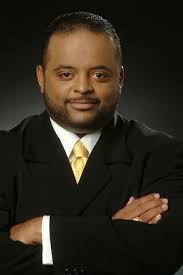
Roland Martin, political correspondent for CNN and The Tom Joyner Morning Show, interviewed NAACP's CEO Ben Jealous about the law suit against Wells Fargo and several other banks for institutionalized racism. Mr. Jealous addressed the records that banks must make public about their lending ratios. Jealous stated that many of the blacks applicants were put in subprime loans that actually qualified for conventional loans. Jealous also stated that African American were target specifically for this type of discriminatory practices.
I read the lawsuit several times prior to my posting several weeks ago but I thought it would be interesting to pull out several key points of the lawsuit to further expand on my original post.
The suit states:
5. Wells Faro Bank, N.A. and Wells Fargo Home Mortgage, Inc target the African American community by capitalizing on their relative lack of experience in dealing with banking institutions and mortgage loans. Upon information and belief, Wells Fargo Bank, N.A. and Wells Fargo Home Mortgage, Inc. are aware of the African American Community's susceptibility to predatory lending practices, but nonetheless engage in policies and procedures that they know will result in African Americans being steered toward less favorable loans.
6. Indeed, in 2006, the Center for Responsible Lending, a non-profit research organization, found that even when income and credit risk were accounted for, African American were still 31% to 34% more likely to receive higher rate subprime loans, and that the disparities between them and Caucasians with the same risk factors were "large and statistically significant."
These particular points intrigued me more so than others in light of recent charge to hold folks Accountable by Tavis Smiley. Again this is not a personal attack of Tavis, only a charge to him to do his research and get back to the community that he often admonishes to educate ourselves on the issues, to know all the facts, and to dig deeper in our pursuit of being empowered.
Section 11. states The NAACP brings this class action lawsuit seeking declaratory and injuctive relief based upon the Fair Housing Act, Equal Credit Opportunity Act, and the Civil Rights Act.
Sunday, March 15, 2009
Genma Holmes: Tavis Smiley Must Be Held Accountable Also

by Genma Holmes
While I was reading the lawsuit filed by the NAACP for predatory lending practices, my eyes kept returning to Wells Fargo. My something-smells-funny nose kept sniffing until I looked across my desk and saw the program guide from the recent State of the Black Union (SOTBU). In large font was the Wells Fargo logo, titlesponsor of the event. I wondered if the NAACP had any dialogue with Tavis Smiley prior to the lawsuit being filed. The bank that is being sued for institutionalized racism sponsors a think tank for black folks. (You cannot make this stuff up.)
Wells Fargo has sponsored the SOTBU for several years. SOTBU was the brainchild of Tavis Smiley and birthed from his weekly commentary on the Tom Joyer Morning Show. Tavis Smiley quit the TJMS in April of last year and moved on to other projects that needed more of his attention. One of those projects is to hold President Obama accountable for his political record and campaign promises made on the campaign trail as outlined in his recent book.
From his book:
“During the run-up to the 2008 presidential election, while I was still the resident political commentator on the Tom Joyner Morning Show, I caused quite a stir among the listeners, who are largely African-American, by insisting that we hold then Senator Barack Obama accountable for both his political record and his campaign promises. I wasn’t singling him out, but rather applying the same standard to him that we should apply to all.
I feel now, as I did then, that it is our responsibility as engages citizens to expect now-President Barack Obama to live up to the promises that made him an appealing candidate… As Martin Luther King, Jr.’s Letter from Birmingham Jail reminds us, ‘Human progress never rolls in on wheels of inevitability; it comes from the tireless efforts of men willing to be coworkers with God, and without this hard work, time itself becomes an ally of the forces of social stagnation.’
So, let us take Dr. King’s lead… and go forth and make real the promise of our democracy.” -- Excerpted from the Foreword (pages xii-xiii)
The SOTBU website states "Some of the most influential thinkers, entertainers, and political leaders of our time gather each year to discuss the State of the Black Union during Black History Month. Presented annually in February by Tavis Smiley Presents, the symposium was created to educate, enlighten and empower America by bringing people together and engaging them in thoughtful dialogue, leading the way to constructive action."
The man who has written a book titled Accountable, has accepted sponsorship for years from a bank that is being accused of forcing blacks into subprime mortgages while whites with identical qualifications got lower rates. Class-action lawsuits were filed against Wells Fargo and HSBC in federal court in Los Angeles. Los Angeles was also the host city for the State of the Black Union.
My words may anger some but this is equivalent to a child molester opening up a neighborhood daycare center. It is this type of irony in the black community by leaders and organizations that keeps folks from getting ahead. "Leaders" play nice and accept money from the very organizations that causes the most harm and perpetuate media stereotypes. This happens in many communities but it is perverse in the communities of color.
Does this means Tavis is going to turn his journalistic intuition on Wells Fargo and hold them accountable? I hope so. These are serious charges being leveled at a time when banks that are behaving badly are receiving TARP bailouts. Is he going to compile the number of loans that were given to blacks vs. whites and research the information and give it to the board of directors of Wells Fargo? Will he ask for their resignations? Now that is taking action. Will he helped them be a better bank by helping them exam how they conduct business with people of color? Will he turn down their sponsorship next year and take their logo off his website with a link to their mortgage department? That would be worthy of an NAACP Image Award! Is this not what several of the panelist ask often when others accept sponsorship or advertisement from organizations that do not tow the line when allegations or perceived racist misconduct occur? All the time.
Tavis has always asked his listeners and viewers to be watchful and test everything and everyone. How did Wells Fargo allege predatory practices get around Tavis who would not allow then Senator Obama to campaign without a thorough scrutiny of the issues and his character? President Obama who has been on the national political scene less than ten years is being exam microscopically by Tavis. While SOTBU, Tavis and the same panelists year after year have held meetings with very loud megaphones on radio and television turned blind eyes to the practices of Wells Fargo and others. Practices that have gone on much longer than President Obama has been in the White House according to the time line stated in the NAACP lawsuit.
Many of the speakers at Tavis' 2009 SOTBU event were the same faces sitting in the audience for the 2009 NAACP Image Awards. The award show was televised on the Fox Network, which was the subject of a boycott. (You cannot make this up.) Some body's PR people are not talking to the other folks' legal department and the legal department is surely not talking to the marketing representatives. In the fragile world of sponsorship and raising dollars for mega events to show accountability, this sounds like a church split or at the very least biting the hands that sponsor/televise your events. This is enough to leave one confused and bewildered.
Tuesday, March 10, 2009
Black Financial Scholar Dr Boyce Watkins Talks Obama Policy on NPR
Dr Boyce Watkins, Finance Professor at Syracuse University, discusses foreign policy, The Obama Administration and the Economy. Click the image to listen!

Monday, March 9, 2009

Saturday, March 7, 2009
Prof Boyce Watkins Appears in Essence Magazine w Tyler Perry

Dr Boyce Watkins, Finance Professor at Syracuse University, appears in the March issue of Essence Magazine to discuss money and investing in light of the 2009 Financial Crisis.
Dr. Watkins is one of the world’s leading experts in Finance and was the only African American in the world to earn a PhD in Finance during the year 2002. For more information, please visit www.BoyceWatkins.com.
Dr Watkins has been in Essence Magazine many times in the past, particularly due to his popular book, “Financial Lovemaking 101: Merging Assets with Your Partner in Ways that Feel Good.”
Thursday, March 5, 2009
Woman Sues AT&T After $5,000 Bill

A woman who received a $5,077 bill from AT&T for data charges on her Netbook is suing the wireless carrier and RadioShack for fraud, reports Jacqui Cheng at Ars Technica.
The lawsuit alleges that the two companies conspired to promote a netbook plus data deal that deliberately misled customers and tricked them into paying thousands of dollars per month for service.
Here’s Parks’ story:
Parks purchased a netbook from RadioShack in December of 2008 after the electronics retailer began advertising a heavily subsidized netbook deal: for $99.99 and a two-year AT&T contract, customers could buy a netbook with AT&T’s DataConnect plan, allowing them to get online from anywhere. The DataConnect service costs roughly $60 per month before the usual taxes and fees.
Tuesday, February 24, 2009
CEO Lawrence Watkins Talks about his success
Lawrence Watkins and George Kilpatrick Break down the secrets to success. Click the image to listen!

Saturday, February 14, 2009
Credit Card Companies Secretly Raising Rates

By Dr. Boyce Watkins
www.DrBoyceMoney.com
In case you weren’t sure, credit card companies are not out to help you. If you are financially illiterate and uninformed, they are going to exploit you. If you are worried about the financial crisis, they are going to prey on your fear to get money out of you. They are also doing exactly what the rest of us are doing: trying to remain protected in a fragile economy.
The stimulus is stymied. The bailout is a failout. The stock market has consistently given a “thumbs down” to every piece of legislation passed in response to this crisis. Our economy is like the sick man who won’t respond to antibiotics. While the results of the latest package are yet to be seen, the truth is that no one is sure what will work. Every company is out to protect their assets and hold on to their cash, which means they no longer have much interest in loaning money to you.
Yes, this is true even if you have a good credit score, which is the ironic part.
Customers are opening their monthly statements to find that credit card companies have started to either ration credit (give less of it) or raise the interest rate being paid on outstanding debt. This doesn’t even count all the dirty tactics used, like using your payments to pay off low interest debt first, quietly getting rid of the grace period or charging interest on your balance from the prior two months vs. the current one. Even when you’ve been making payments on time for years, banks keep raising the bar to maximize shareholder wealth. When liquidity is scarce, those giving out water demand a higher cost per bottle. Additionally, higher default rates have justified the increase in interest rates, but higher interest rates increase the likelihood of default. It’s a nasty cycle, really.
Lawmakers are trying to intervene. Congressional hearings have taken place. Banks are being scolded by senators who keep telling them that this form of business practice is unethical and that they are gouging the American consumer. All this might be true, but what is also true is that you can’t force banks to loan you money. Also, it is very difficult, if not impossible, to legislate a strong economy.
If you have a less than stellar financial history, there is an even greater opportunity for your credit card company to raise your interest rates. If you have defaulted on other loans or are a slow payer in other areas, then they have no problem telling you to pay up or ship out. The days of easy money are long behind us, and companies are dramatically shifting their business practices.
The bottom line is that THEY’VE GOT YOU. They know that you’ve become addicted to the debt they so readily offered in the past, and this debt has become the lifeblood for the lifestyle to which you’ve chosen to become accustomed. They know that they can charge you a higher interest rate because you can’t do anything about it. Like a drug addict who is angry about paying more for his product, you really don’t have any other choice.
Well, maybe you do.
Here is one solution: tighten your economic belt. That means putting together a financial fitness plan today that consists of getting rid of as much debt as possible. I’ve mentioned in prior articles and on our website that paying off debt can be one of the best investments you make with your money. This is especially true if you have a stable job and are paying a high rate of interest to your credit card company.
So, the Dr. Boyce Challenge for this month is simple: Create a budget which includes the steady elimination of credit card debt. That means you should list every single expense you have for the entire month on one piece of paper or a spreadsheet. Don’t leave anything out. Count the money you want to use for getting your hair done, your nails, paying your mortgage, car note, whatever. Count everything. That will be your first step toward obtaining financial fitness.
As you create the budget, allocate at least 10% of your monthly after tax income toward reducing credit card debt. So, if you earn $3,000 per month after taxes,$300 per month should be allocated toward removing credit card debt, not including interest. So, if you owe $5,000 in credit card debt, you can remove this debt in roughly a year and a half. While $300 may seem like a lot of money to find in your budget, it’s there if you look hard enough. In fact, if you spend $10 per day on lunch and/or coffee, you can find the bulk of the money by taking your lunch to work. Make this one of the first bills you pay, not the last. The last bill is the one that only gets paid half the time. It’s easier to negotiate with creditors if you don’t need them so much. Take small steps toward finding your financial freedom.
Next month, we will move to step 2 of the Dr. Boyce Financial Challenge. While I confess that this change won’t be easy, I can promise that it will be worth it in the end. Be strong and remain focused, this is your opportunity to shine.
Dr Boyce Watkins is a Finance Professor at Syracuse University and author of “Financial Lipo 101: From financial fat to fitness”, to be released in April, 2009. For more information, please visit www.DrBoyceMoney.com.
Thursday, February 12, 2009
Stimulus Battle May Threaten Obama’s Agenda

It is a quick, sweet victory for the new president, and potentially a historic one. The question now is whether the $789 billion economic stimulus plan agreed to by Congressional leaders on Wednesday is the opening act for a more ambitious domestic agenda from President Obama or a harbinger of reduced expectations.
Related
Deal Reached in Congress on $789 Billion Stimulus Plan(February 12, 2009)
President Obama and Gov. Tim Kaine on Wednesday at a parkway project in Springfield, Va., that could get stimulus money.Both the substance of his first big legislative accomplishment and the way he achieved it underscored the scale of the challenges facing the nation and how different a political climate this is from the early stages of recent administrations.
While it hammered home the reality of bigger, more activist government, the economic package was not the culmination of a hard-fought ideological drive, like Lyndon B. Johnson’s civil rights and Great Society programs, orRonald Reagan’s tax cuts, but rather a necessary and hastily patched-together response to an immediate and increasingly dire situation. On the domestic issues Mr. Obama ran and won on — health care, education, climate change, rebalancing the distribution of wealth — the legislation does little more than promise there will be more to come.
In cobbling together a plan that could get through both the House and the Senate, Mr. Obama prevailed, but not in the way he had hoped. His inability to win over more than a handful of Republicans amounted to a loss of innocence, a reminder that his high-minded calls for change in the practice of governance had been ground up in a matter of weeks by entrenched forces of partisanship and deep, principled differences between left and right.
In the end, Congress did not come together to address what Mr. Obama has regularly suggested is a crisis that could rival the Great Depression. What consensus has been forged so far is likely to be tested in the months to come as he faces scrutiny over the effectiveness of the stimulus package and the likelihood that he will have to ask Congress for substantially more money to heal the fractures in the financial system.
So this was hardly a moment for cigars.
If this is the 21st-century version of Franklin D. Roosevelt’s 100 Days, Mr. Obama seems to be pursuing it more as an urgent but imposed necessity than as a self-selected mission.
While he has deployed his political capital freely to win approval of the package and to begin pushing his version of a financial-system rescue, he has left little doubt that he is eager to move on to the rest of his domestic agenda. At his news conference on Monday night, Mr. Obama said with a hint of exasperation that a costly economic rescue package “wasn’t how I envisioned my presidency beginning.” Regardless of the government’s budgetary straits, Mr. Obama has signaled that he sees his other signature initiatives not just as salvageable but as more urgent than ever.
Click to read more.Sunday, February 8, 2009
Obama’s Package Gets Items Sliced
A coalition of Democrats and some Republicans reached a compromise that trimmed billions in spending from an earlier version of the Senate economic stimulus bill.

Senators worked late into the night to trim billions from the original stimulus bill.

CNN obtained, from a Democratic leadership aide, a list of some programs that have been cut, either entirely or partially:
Partially cut:
• $3.5 billion for energy-efficient federal buildings (original bill $7 billion)
• $75 million from Smithsonian (original bill $150 million)
• $200 million from Environmental Protection Agency Superfund (original bill $800 million)
• $100 million from National Oceanic and Atmospheric Administration (original bill $427 million)
• $100 million from law enforcement wireless (original bill $200 million)
• $300 million from federal fleet of hybrid vehicles (original bill $600 million)
• $100 million from FBI construction (original bill $400 million)
Fully eliminated
• $55 million for historic preservation
• $122 million for Coast Guard polar icebreaker/cutters
• $100 million for Farm Service Agency modernization
Wednesday, February 4, 2009
Tuesday, February 3, 2009
Obama Daughter Look-a-like Gets Rich Off Her Looks
Ariel Binns is cute, smart, outgoing and looks remarkably like first daughter Sasha Obama.

Young model Ariel Binns, right, resembles Sasha Obama.
The similarity has not gone unnoticed by the fashion industry. Harper's Bazaar magazine cast the 6-year-old Brooklyn, New York, first-grader with model Tyra Banks in a photo spread showing an African-American family in the White House.
Binns, a child model, was peering out from under a big wooden desk in an image reminiscent of John F. Kennedy's time in office.
When it comes to fashion there's nothing like a powerful brand to boost sales, especially if that brand is a dynamic first family.
"Marketers are finally waking up to it -- you know -- black is beautiful," says global branding expert David Rogers who predicts African-American models will play a more prominent role in fashion photography as a direct result of the Obamas. "It's just going to become part of the fabric of the fashion imagery of pop culture, which is a great thing," says Rogers. 
At Wilhelmina Kids, a modeling agency in New York for kids and teens, agents say there is increased demand for first daughter look-alikes.
"It's a trend because, what little girl doesn't want to emulate the first kids?" said Marlene Wallach, president of Wilhelmina, which represents Binns.
Unlike the Bush twins or Chelsea Clinton, global branding experts say the appeal of the Obama girls is unique -- and infinitely marketable. After the first kids appeared in their J.Crew outfits on Inauguration Day, the company's Web site got so many hits, it crashed.
Technorati Tags: barack obama,obama family,sasha obama,black news headlines,african american news,black news
Helping Your Parents in Retirement

Question: My mother is 50 years old and has no 401(k), IRA or any type of retirement account that she can rely on when she is no longer able to work. What type of plan can I set up for her so she can start saving money? L.K., Lancaster, Pennsylvania
Answer: The issue of what adult children can and should do to help assure that their parents are financially prepared for retirement is one that's getting more attention as lifespans increase and we become increasingly reliant on our personal savings to fund our post-career lives.
Typically, though, this is the type of question I get from baby boomers who, already squeezed by simultaneously saving for retirement and paying school and other child-rearing costs, now face the prospect of also having to provide financial assistance to retired parents.
Monday, February 2, 2009
Black Wealth Report: Black Women's Hair Should be a Black Business


The Black Hair industry is a multi-billion dollar industry. This industry has created other revenue generating vessels such as, conferences, schools, distribution, competitions, marketing, and even research. With an industry that is so huge and driven by the black dollar, one would expect that this industry would be under the direct control of those that make it successful, the black race. However, it is not. Though blacks still control many of the hair salons and barbershops, there is still a major disparity in many of the other businesses within this industry. Plus, recent trends have begun to emerge in the marketplace that threatens the ownership of those two entities. There is a new business model for salons, Korean-Owned and Black-Operated. This new model is growing rapidly and becoming a success among the community. While customers can continue to receive services from a familiar black stylist, the dollar ultimately goes to the Korean community.
It’s absolutely not a bad thing that Koreans are becoming fierce competitors and business owners in this black industry, so standing on the sidelines boycotting these establishments or calling for them to discontinue is a way that further perpetuates the blacks’ “right to survivorship” thinking. Blacks should not expect to be able to merely sit on a golden egg that was handed to them and not expect others to want a piece of it. The golden egg must be protected and guarded like the lion guards its kill from the hyena. Since the system we live under a capitalist system, the way a person or group rises to great wealth and sustainability is through competitive edges. Is this true? The retail segment of the black hair business is another entity that works to cipher the dollar from black community and be sent elsewhere. After research of over 800 black served beauty supply stores, we uncovered an ownership base of less than 5%. Of these same stores during a 6-month evaluation we found more than 97% of black consumers.
Is this a huge snowballing problem that should be addressed? Do blacks have the resources and opportunities within their communities but are simply not harnessing these opportunities? The problem of a low number of retail stores does not begin there. It begins at the distribution level. There is still a significant amount of black manufacturers of products but once these products leave the black manufacturers, they are placed in the hands of Korean distributors then the problem begins. Once the Korean distributors get a hold of the products they do two things: 1. They selectively distribute the products to retailers and sometimes at different prices. 2. They study the black products and soon create prototypes and begin marketing these prototypes to their huge Korean retailer base. Lucky White, CEO of Kizure Products, has boasted this as being one of her major dilemmas in her business slowdown. She is not only being competed against by other equipment manufacturers, the distributors are acting as lobbyist for her competitor.
In an industry that resulted in billions due to pioneer, Madame C.J. Walker, a black woman born into poor conditions in the early 20th century, one would expect the blueprint to this industry to be studied and executed by blacks across America but sadly this has not been the case. Why? It is not as simple as setting up shop and waiting for high profits anymore. Retail storeowners are facing many competitive obstacles such as capital, a large selection of products, and pricing. In most cases, getting an account with a Korean distributor as a Black person means you face an uphill battle. First, the distributor must approve your location before agreeing to supply your store. If they agree, now payments must be made in cash upfront with no delayed terms of payment. This is perhaps the hugest obstacle a new black storeowner faces. Then, this is a rippling effect. If distributors are consuming the capital instantly, then there is less available for the new black owner to obtain an abundant variation of products. Lastly, the pricing advantage many Korean stores are able to provide for the black consumer keeps them coming back over and over again, showing very little regard to a black storeowner down the block. This pricing advantage is also a resource for the Koreans because of the relationship they have with the Korean distributors.
However, the nail has not yet been driven into the coffin of the black lockout of their stake in this industry. I am living proof. I emotionally entered into this industry when I was thrown out of a Korean-Owned beauty supply store while I was attempting to make a huge purchase for my salon. The owner felt uncomfortable with me browsing and being selective. His frustration grew to rage so he then threatened me with a golf club eventually throwing me out of his store. Like many black men, I didn’t know of the huge lockout that took place in this industry until I had already signed a $5,000 lease for a location. My uphill battle began as distributors wanted cash and many didn’t even return my phone calls. Little did many of them know my persistence is abnormal. I took daytrips on airlines to physically walk into locations in New York and Miami until I got what I wanted. My goal was to give our community options in shopping while receiving the respect they deserved. My one location turned into three in 18 short months. Trial and error was my ally. As I learned, I perfected. Here a few things that an aspiring owner can implement.
Communicate with other owners – Find other owners willing to communicate with you in your market and even throughout the country. They are more than willing to share valuable information with you and you should do the same.
Automate the Store – In this fast-paced era, do not rely on spreadsheets and manual inventory tracking. This can slowdown your customer fulfillment process and tie up valuable time that could be used elsewhere.
Be a competitive and creative owner – Do not do what the next guy is doing, do what he isn’t. Establish store niches.
Establish Non-Competitive Clauses – Secure your market share within your mall at the least. Do not leave the gate wide open.
Manage the Cash Effectively – From your gross, pre-allocate percentages for capital expenditures, marketing, taxes, procurement, payroll, etc and have different bank accounts for each one with the monies being deposited systematically. Do not rely on self to divvy up or disburse the funds as you receive revenue.
Form Alliances Outside the Black Hair Industry – I once went to a children’s theme park with my sons and discovered that a local pizza franchise provided the pizzas for the business at a discounted rate. These opportunities exist for beauty storeowners as well. I established plenty. One place is funeral homes.
Seek Consulting – Never think you know it all. I had two beauty storeowners that acted as my mentors for the first year. I compensated them for intense assistance but for quick advice they were glad to help. Expect nothing for free. Allocate funds for this too.
Location, Location, Location – Do not pick a convenient location for you, pick a convenient location for the customer. There are moneymaking opportunities even when there is an existing beauty store. Don’t be afraid of the competition. The way you operate may be the way the customers in that market prefer.
Though I have highlighted distribution as the component needed, it is not the way to launching strategic efforts, and neither is boycotting. Building up the amount of black-owned retail stores is the first step in a strategic plan like this. The demand must first be created if a black distribution plant is to be successful. The black hair business is a cash cow but in its current state the cow is jumping over the moon with the moneybag heading to other communities.
Devin Robinson is the author of Taking it Back: How to Become a Successful Black Beauty Supply Store Owner who resides in Atlanta, GA. Visit his website athttp://www.takingitbackblack.com/.
Sunday, February 1, 2009
Study shows that subprime lending costs Minorities over $213B
The social advocacy group United for a Fair Economy just released a study stating that the cost of the mortgage crisis has been $213 Billion to minority groups. The cost was calculated over the 8 years of the Bush Administration.
"Millions of African Americans lost their homes as a result of predatory lending and complicated contracts," says Dr. Boyce Watkins, Finance Professor at Syracuse University. "This was a double whammy for senior citizens, including my own grandfather."
The report was entitled "Foreclsure: State of the Dream". In fact, the study concludes that the impact of the crisis on the Black community was "the most massive loss of wealth for African Americans in U.S. history."
Your Black Wealth: Bank Bailouts Used to Hire Foreigners

Banks collecting billions of dollars in federal bailout money sought government permission to bring thousands of foreign workers to the U.S. for high-paying jobs, according to an Associated Press review of visa applications.
The dozen banks receiving the biggest rescue packages, totaling more than $150 billion, requested visas for more than 21,800 foreign workers over the past six years for positions that included senior vice presidents, corporate lawyers, junior investment analysts and human resources specialists. The average annual salary for those jobs was $90,721, nearly twice the median income for all American households.
The figures are significant because they show that the bailed-out banks, being kept afloat with U.S. taxpayer money, actively sought to hire foreign workers instead of American workers. As the economic collapse worsened last year — with huge numbers of bank employees laid off — the numbers of visas sought by the dozen banks in AP's analysis increased by nearly one-third, from 3,258 in fiscal 2007 to 4,163 in fiscal 2008.
Technorati Tags: black money,african american money,black wealth,african american wealth,black investing
Subscribe to:
Posts (Atom)


